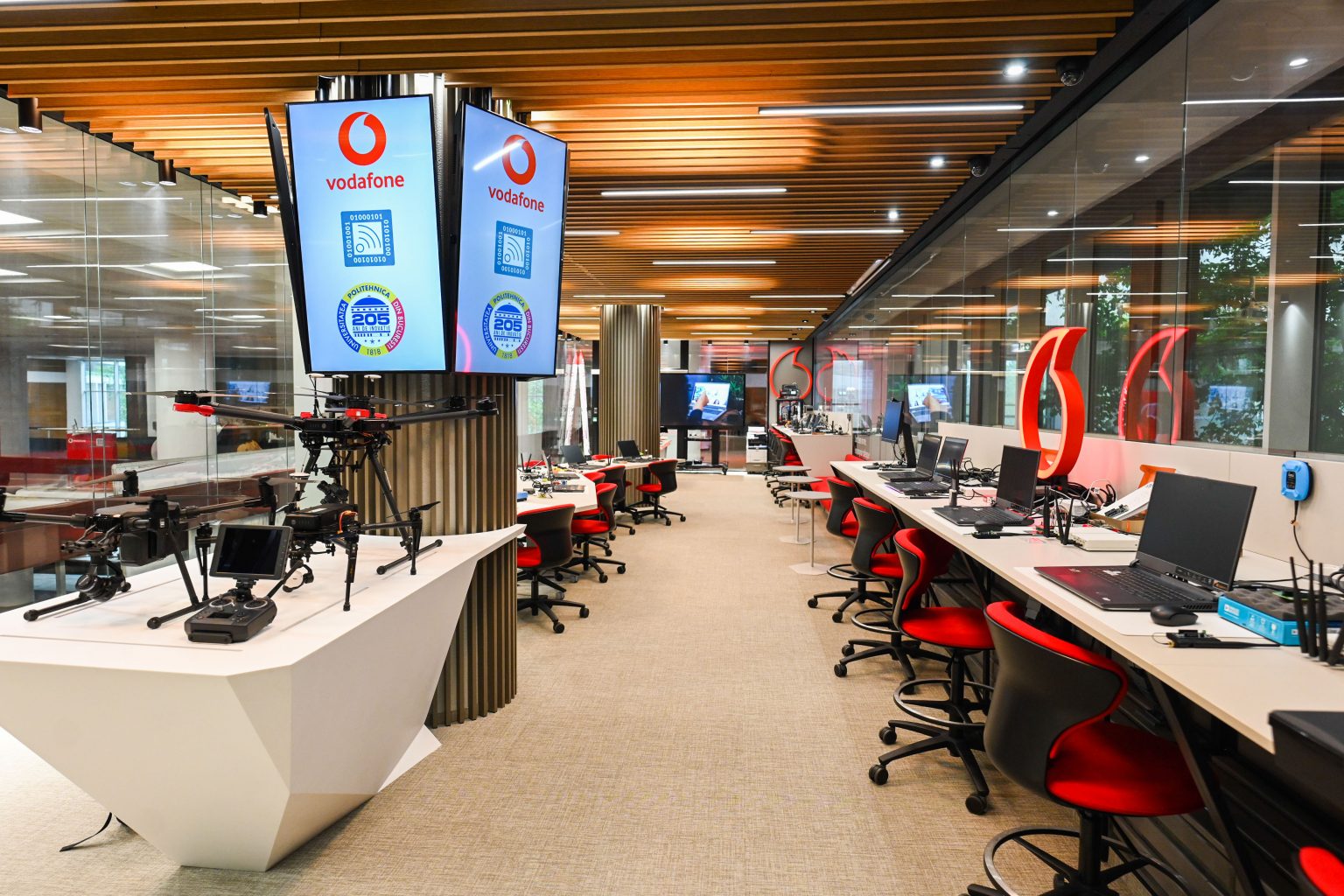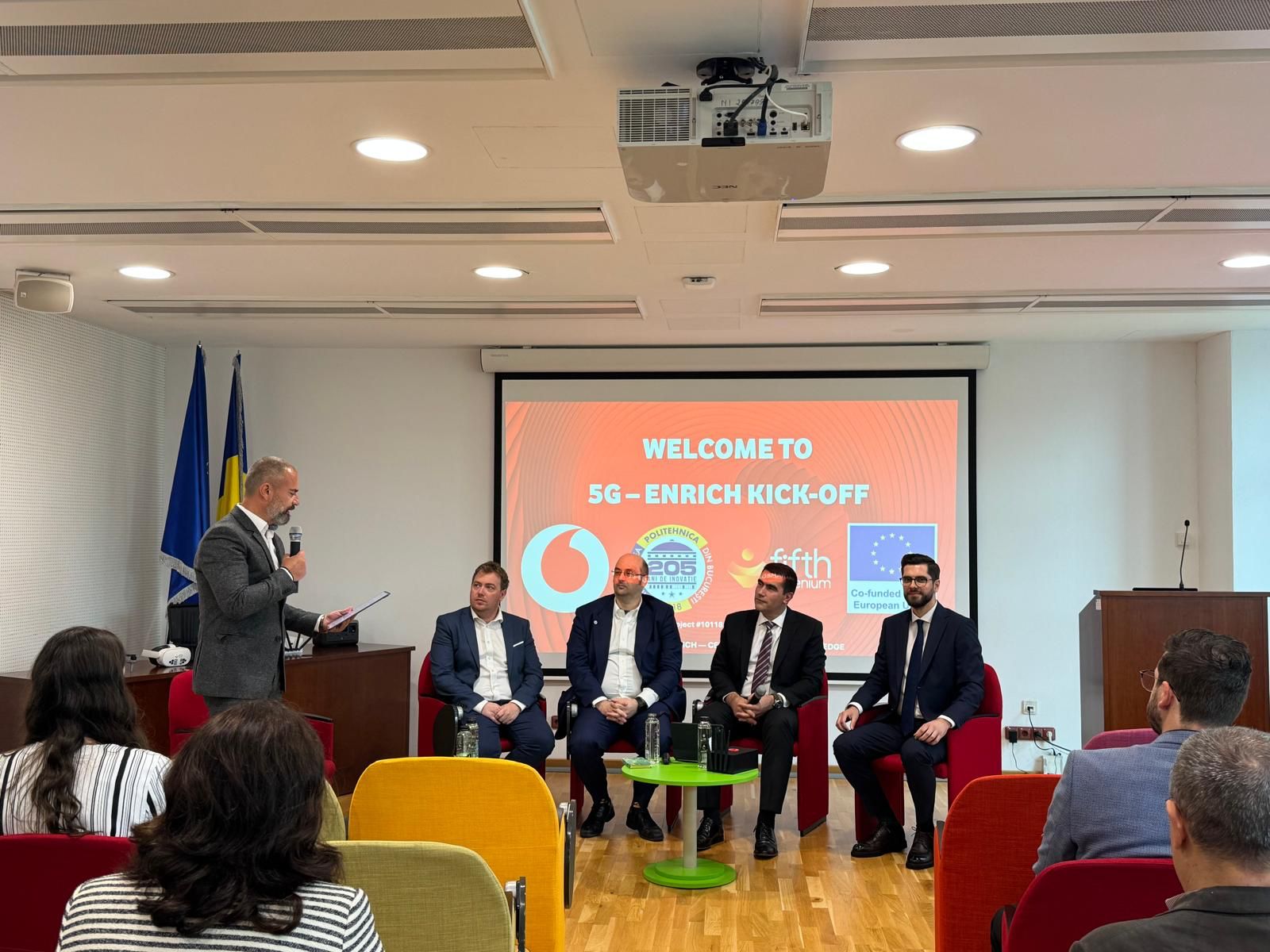
Vodafone Romania builds the first 5G Standalone educational mobile private network in the National University of Science and Technology Politehnica Bucharest as part of a European Commission funded strategic project
This innovative initiative promises not only to transform the academic experience, but also to reduce the digital divide and stimulate innovation in research, providing a concrete example of effective collaboration between academia, industry, and European institutions.
Nicolae Vîlceanu, Network Director at Vodafone Romania, highlighted the essential role of communications in the digital transformation process during the launch of the first private 5G Standalone educational mobile network, emphasizing that both Romania and Europe are following a common path in this direction. However, he warned that, despite local technological advances, the level of digital development in Europe is not as advanced as in other regions of the world.
If we look at the percentage of 5G coverage in other continents, it exceeds 85%, while in Europe it is barely over 25%. There is a huge gap.
Vodafone Romania, in partnership with the National University of Science and Technology Politehnica Bucharest and Fifth Ingenium, sets out to implement the 5G-ENRICH (5G-Edge Network for Reinventing Innovation in Community and Higher-Education) project, a digital infrastructure initiative supported by the European Commission through the CEF Digital programme.
This is the first Romanian 5G edge computing network funded by the European Union. It is the first project of its kind in Romania, dedicated to education. And it will cover everything here. This encouraged us to apply for the expansion of the project, to go even further—to Pitești and other university locations, and to Cluj, to create a bridge. If we meet again in a few months, it means that the project has been approved.
A few years ago, the challenge was that we didn’t have the technology to solve a problem. Today, we often have to find a problem to solve for the technology we have. That’s actually my job, my company’s job. We try to turn advanced technologies into useful tools, into applications that can be used, that can have an impact. I believe that one of the roles of the University is precisely this: not only to develop technologies, but also to understand how they can be applied in everyday life.
Referring to artificial intelligence, Matteo Valoriani pointed out that it is an essential part of his work.
Today, computing power is essential. We have enormous computing power even in our pockets. An image sent via messaging apps probably takes up a megabyte or even more. So yes, today we have computing power. But connectivity has become a key element of our lives, especially when we want to develop large-scale projects that require much greater computing power.
Valoriani also mentioned artificial intelligence and real-time applications developed using extended reality (XR) technology, which can be applied across various sectors and markets.
I believe that education is one of the sectors that can immediately benefit from the combination of 5G and XR technology.
Today, everything revolves around artificial intelligence. And that requires enormous computing power. The problem arises when you need that capacity—you say to yourself: I need a server, or at least access to one. But what if the server is in one place and you are in another? How do you approach real-time processing tasks, for example?
With a total funding of EUR 2.9 million, including EUR 0.7 million in co-financing from project partners, the initiative will play a key role in bridging the digital divide, promoting digital inclusion, and boosting economic growth in the region. The platform is also designed as a collaborative ecosystem that brings together partners from academia, industry, and research institutions.
Ciprian Zamfirescu, Head of Innovation and Business Development at Vodafone Romania, highlighted an essential aspect related to the adoption of this technology in Europe during the launch event for the first private 5G Standalone educational mobile network: currently, only a quarter of the population is connected to the latest generation of 5G networks.
Furthermore, Zamfirescu stated that Vodafone is actively involved in developing technologies for the use of drones in Romania for rescue missions and search techniques.
We have started connecting people and even mountain rescuers with mobile signals in the most remote areas, as well as with state-of-the-art technology. And we have managed to save lives. More than 130,000 lives in over 20 years of partnership. These drones will reach urban areas, where we will have dispatch centers. But we need a network to connect them based on 5G SIM cards. Since they are not piloted by humans, we will be able to use several drones at the same time. It is an extraordinary opportunity for the research environment.
A pioneering project with a duration of 36 months, 5G-ENRICH represents the first Standalone 5G educational infrastructure as part of university faculties. By harnessing the transformative potential of 5G technology, the project will introduce immersive learning experiences that transcend the traditional boundaries of classrooms, facilitating real-time collaboration, exploration, and engagement through high-tech tools such as virtual reality and artificial intelligence (AI). The initiative also aims to improve campus safety and emergency response capabilities by integrating drones, edge computing, and real-time video analysis.
The project directly contributes to the objectives of Europe’s Digital Decade by promoting resilient digital infrastructure and digital inclusion. By providing equitable access to advanced 5G networks and edge computing, 5G-ENRICH reduces the digital divide, revolutionizing education, improving academic research, and promoting technological innovation at the National University of Science and Technology POLITEHNICA Bucharest and beyond.